Ancestral Weight Loss Registry
  • Home
  • Join
  • Results
  • Testimonials
  • Science
  • Blog
  • About

Understanding Primal Blueprint through crowdsourcing

2/23/2014

0 Comments

 
This post first appeared on Mark's Daily Apple.
---
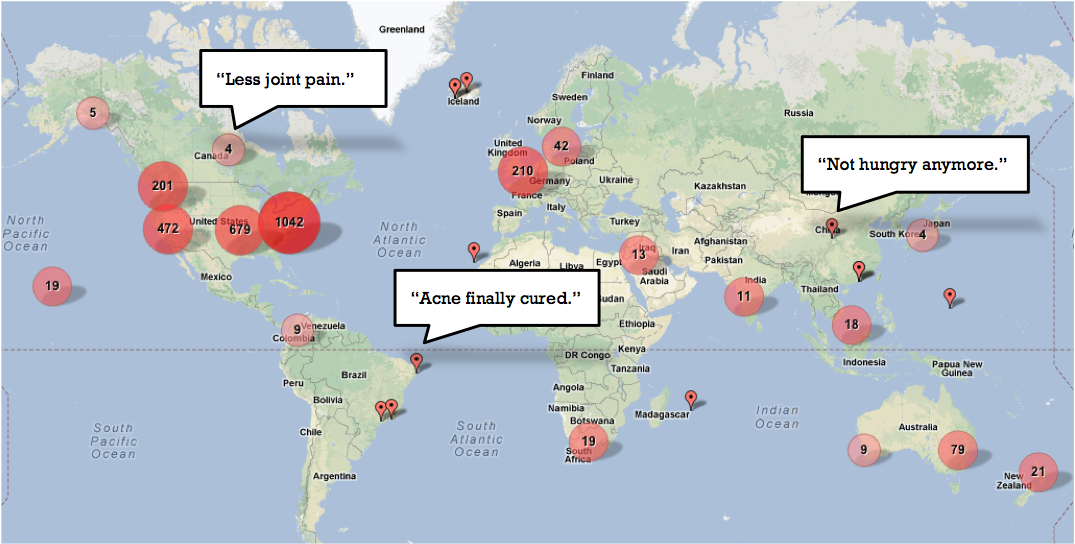
After two years, we at the Ancestral Weight Loss Registry (AWLR) are proud of what we’ve become. Over 3,100 people from all 50 states and over 55 countries have registered and shared the tribulations and triumphs populating their noble journey towards health, fueled by fatty meats with a side of buttered broccoli. A physician’s recommended eating strategy that, but for a few years ago, would at the very best be viewed as a data-less void of speculation, and at the worst, labeled utter quackery. Asking an overweight patient to eat foods high in calories does not pass the proverbial eyeball test, defying all common wisdom characterizing weight loss advice to date.

Coming up with a testable hypothesis for why we gain weight and how to lose it undoubtedly involves logic, intuition and researcher experience. As Nobel laureate Richard Feynman describes scientific discovery and hypothesis testing:
 

“First we guess it…then we compute the consequences of the guess to see what it would imply. And then we compare those computation results directly to observation to see if it works. If it disagrees with the experiment, it’s wrong. In the simple statement is the key to science”

But what if we didn’t have to guess it? What if we had the capabilities to crowd-source hypothesis creation instead of relying on bias-confounded researcher intuition? This is the motivation for AWLR, and central to its success is you. Primal Blueprint (PB) followers make up 40% of registry members and from the bottom of my heart, I thank those who have registered thus far and urge those who have not to register here today to help make AWLR the largest weight loss registry the world has ever seen.

PB eaters have contributed a tremendous amount of data. The common experiences and behaviors that materialize by straining your conglomerate information through an algorithmic sieve become hypotheses that spawn a reverse engineering problem, beginning with clinical findings and searching for mechanisms of action. One of the most interesting such trends was that related to hunger.

“After going primal, I just didn't get so hungry any more. And when I did feel hunger, it wasn't so pressing, and I could easily ignore it and it would go away for a while.”


“The ease of Primal Blueprint has surprised me the most. Fat tastes delicious, so I eat better-tasting food. I don't go hungry because I simply eat until I'm full instead of counting calories.”

See our testimonials page for hundreds of similar quotes. 95.8% of PB eaters report feeling “rarely or never hungry between meals” and of those who have tried a low fat diet in the past, 91% report feeling less hungry while eating PB. This satiety has led to an average of 33 pounds lost and over 31,000 pounds dropped total.

Could these findings be real? Or are they simply a function of the non-randomized, self-selected data that has accrued? Taking a journey through the medical literature may offer some insight.

They Starved, We Forgot
In 1944, Ancel Keys recruited 36 men into what would be known as the Minnesota starvation experiment, to study the physiologic and psychological effects of prolonged and severe dietary restriction. He documented his findings in a 1400 page tome, and shortly after the experiment began, the men quickly realized how difficult it might be. The predictable signs and symptoms quickly crept in: constant hunger, low body temperature, decreased libido and a total inability to think of anything but food. One subject offered a particularly chilling exposé of what it is like to eat such little food:

"How does it feel to starve? It is something like this: I'm hungry. I'm always hungry - not like the hunger that comes when you miss lunch but a continual cry from the body for food. At times I can almost forget about it but there is nothing that can hold my interest for long. I wait for mealtime. When it comes I eat slowly and make the food last as long as possible. The menu never gets monotonous even if it is the same each day or is of poor quality. It is food and all food tastes good. Even dirty crusts of bread in the street look appetizing and I envy the fat pigeons picking at them.”

So what were they eating? “The major food items served,” described Dr Keys “were whole wheat bread, potatoes, cereals, and considerable amounts of turnips and cabbage. Only token amounts of meats and dairy products were provided,” with an average daily intake of 1570 calories, including about 50 grams of protein and 30 grams of fat.

Fast-forward 70 years
The director of Boston Medical Center’s weight management clinic and obesity consultant for Dr. Oz, Dr. Caroline Apovian describes in an interview how she treats her patients’ weight troubles.

“If somebody came into my clinic who had a BMI of 30—female—I would put them on a 1,200- to 1,500-calorie-a-day diet, and they usually would be eating 2,500. A normal, moderately active female eats 2,000 calories a day, and a male, 2,500.” But wouldn’t this “produce a chronic hunger?” the reporter aptly counters. “It does,” replies Apovian, “and it’s usually a hunger that people cannot tolerate. That is the reason most diet programs fail.”

So how did the ‘starvation diet’ of 1944 become the standard of care today?

Protein, Hunger & Weight Loss

The Fat Trap, a popular New York Times article from 2011 profiles a study by Dr. Joseph Proietto, highlighting the difficulty in losing weight on a low calorie diet. Proietto recruited 50 obese men and women, studying the biological state of the body after weight loss. The patients were given 500 calories of a low fat Optifast shake each day for eight weeks. But after a year, the weight slowly came back and the subjects were haunted by their diet-induced hormonal changes, feeling “far more hungry and preoccupied with food than before they lost the weight.” Researchers also noticed that ghrelin, often dubbed the ‘hunger hormone,’ was about 20 percent higher than at the start of the study. “What we see here is a coordinated defense mechanism with multiple components all directed toward making us put on weight,” Proietto says. “This, I think, explains the high failure rate in obesity treatment.”

However, this weight-loss-induced ghrelin rise is only observed when ketosis is absent. These same researchers three years later sung to a different tune:


“Ketogenic low-carbohydrate diets are a popular means of weight loss, and in the short-term, often result in greater weight loss than low-fat diets…it is commonly proposed that ketones suppress appetite, and it has been observed that study participants on ad libitum ketogenic diets spontaneously restrict their energy intake.”

And their randomized trial in the European journal of clinical nutrition confirmed this observation, demonstrating that “in mildly ketotic participants, the increase in the circulating concentration of ghrelin, a potent stimulator of appetite, which otherwise occurs as a result of diet-induced weight loss, was suppressed.”

This anorexic effect secondary to a high protein, high fat diet likely explains why PB eaters are so successful and happy with their new way of eating. It could also explain why in the majority of randomized clinical trials testing such diets, those highest in protein and fat systematically lead to more weight loss. There are at least 14 randomized clinical trials in which the people assigned to a calorie unlimited high protein, high fat diet lose more weight than their low fat, calorie restricted counterparts.

Which begs the question: Where are the randomized clinical trials supporting low fat diets as the standard of care? The studies where a low fat, calorie restricted diet results in more weight loss than a calorie unlimited high fat diet. In fact, we at AWLR were so bewildered by the lack of evidence that we are running the ‘Low Fat Challenge’ for anyone in the world to find such a trial, incentivized by a crowd-funded pot of cash. After nearly a year, hundreds of dollars have been raised with no winner to accept.

My wildest dream would be to make AWLR the largest weight loss registry in the world within the next year, overtaking the National Weight Control Registry that has a 15-year head start. They boast around 10,000 members after approximately 17 years of existence.  At 3,100+ after two years, it is an ambitious but attainable goal; A dream that can only be achieved with your help. It would make a tremendously unbelievable statement to the dietary research community if Paleo and PB was so prominent and demonstrated such incredible improvements in health. If you have not registered yet, please take 10 minutes to do so here. And if you have, sharing this post with the world would make all the difference.

As you are reading these words, there is someone out there who is depressed, unhealthy and overweight. A poor soul being shunned by the medical community due to their “lack of willpower,” who struggles to get by on their 1400 calorie low-fat diet. A beautiful human being with boundless happiness trapped underneath the overwhelming heaviness of constant hunger and a label of ‘BMI > 30’, desperately searching for a real solution. With your help, I hope we can reach them and offer a gentle, heart-felt helping hand.

---
Tried a paleo or low carb diet? Join Today and contribute to a better understanding of this way of eating!

View our Marketplace of paleo and low carb experts that compete against eachother to help you lose weight and get healthy!

0 Comments

Photocalorie + Mass General Hospital

2/11/2014

0 Comments

 
Picture
I am truly excited to announce that our sister site and the company I co-founded with Adam Marcus, Vince Fusaro and Mark Boguski - PhotoCalorie - is officially licensing our software to researchers at Massachusetts General Hospital, studying childhood obesity. 

It has been nearly five years of hard work to get to this point.  Starting out in June 2009, all we knew was that the current gold standard of pen and paper food journals was not acceptable for our most pressing health issue. 

We believe we can offer some features that other technologies currently being used cannot, including:
  • 60,000 food database all standardized to one portion size for easy search
  • Two step search with basic natural language processing
  • All photos and nutrition information are transmitted to researcher database in realtime, freeing their precious time from data entry
  • Decreasing recall bias by allowing users to take pictures of their meal and enter a description at a later time
  • Decreasing portion size misestimations by allowing researchers to literally see what a study subject is eating from their photo and make adjustments accordingly
  • E-mail reminders automatically sent to non-compliant subjects when they miss a meal
  • Ultimate customizability - we have worked with a few research groups and all had different stipulations for the data collected, the look of the landing page, etc. 

For all related inquiries, see our PhotoCalorie page or email us at [email protected]. 
For everyone else, lets celebrate!

---
Tried a paleo or low carb diet? Join Today and contribute to a better understanding of this way of eating!

View our Marketplace of paleo and low carb experts that compete against eachother to help you lose weight and get healthy!

0 Comments

Happy saturday: 2 must watch talks

2/8/2014

0 Comments

 
Picture
Nothing beats a lazy Saturday afternoon in a coffee shop working on AWLR. We have a few exciting updates approaching and are working diligently to prepare. In the mean time, here are two TED talks you  must watch today.

Diana Nyad: Never, Ever Give Up
The first human to ever swim from Cuba to Florida without a shark cage. After taking a 30 year break from marathon swimming, Diana decided to try again. After 4 failures - due to weather, illness, jellyfish stings - she finally did it on her 5th try. Oh by the way, she is 64 years old. Listen to her inspiring TED talk below.


Shawn Achor: The Happy Secret to Better Work
Shawn Achor is the CEO of Good Thinc Inc, a consulting firm which researches positive outliers to understand where human potential, success and happiness intersect. Really funny and interesting talk.

---
Tried a paleo or low carb diet? Join Today and contribute to a better understanding of this way of eating!

View our Marketplace of paleo and low carb experts that compete against eachother to help you lose weight and get healthy!

0 Comments

AWLR Goes to tufts Human nutrition research center

1/28/2014

0 Comments

 
Picture
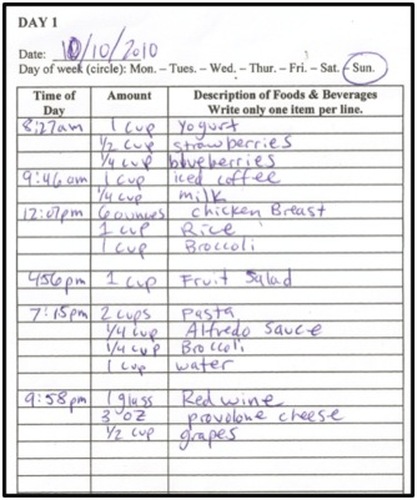
I am back from Boston where I presented PhotoCalorie and AWLR data to Dr. Susan Roberts's research group at Tufts Human Nutrition Research Center. They were gracious hosts and I am very thankful for the opportunity.  The main points of my talk highlighted how we believe PhotoCalorie could revolutionize the way dietary research is performed, by allowing the investigator to literally see what their study subjects are eating in real time, and objectively confirm that their description matches the foods depicted in the photo. Right now the gold standard in dietary research is a 3-day food record, which is scientific jargon for pen and paper. Check out a real copy of this incredible technology below!

Picture
Of course, when the researchers receive this piece of paper they have no choice but to trust that the study subject accurately portrayed the foods they ate, which massive amounts of research would refute. They tend to overreport healthy foods, under report foods deemed unhealthy, forget what they had for breakfast, etc.

The second portion of the talk dealt with AWLR and the huge amount of data we've collected. Over 3,100 people from over 55 countries, making AWLR one of the largest international databases of health and nutrition information to date. 

Most surprising was when I was presenting all the randomized clinical trials supporting low carb, Dr. Susan Roberts stepped in and said "You are preaching to the choir. None of us believes low fat is the way to go at this point. Just too much evidence against it."

I couldn't believe my ears.

I was also told the 58 Native Americans who have registered (as of a few months ago) make AWLR probably the largest study of Native American diet in recent history. Interesting. 

There was no video to share, but I gave a similar talk to the American Society of Bariatric Physicians last year that you can see here.

More updates to come.... STAY TUNED!

Picture
With Adam Marcus PhD, PhotoCalorie co-founder and director of data at GoDaddy.
---
Tried a paleo or low carb diet? Join Today and contribute to a better understanding of this way of eating!

View our Marketplace of paleo and low carb experts that compete against eachother to help you lose weight and get healthy!
0 Comments

Visit with Peter Attia at Nusi

1/19/2014

3 Comments

 
Picture
"It is not the critic who counts; not the man who points out how the strong man stumbles, or where the doer of deeds could have done them better. The credit belongs to the man who is actually in the arena, whose face is marred by dust and sweat and blood; who strives valiantly; who errs, who comes short again and again, because there is no effort without error and shortcoming; but who does actually strive to do the deeds; who knows great enthusiasms, the great devotions; who spends himself in a worthy cause; who at the best knows in the end the triumph of high achievement, and who at the worst, if he fails, at least fails while daring greatly, so that his place shall never be with those cold and timid souls who neither know victory nor defeat."

-Teddy Roosevelt
For those of you who may be unfamiliar, the Nutrition Science Initiative is a non-profit company started by Gary Taubes and Peter Attia that has a chance to change the world forever. With millions in funding from a billionaire philanthropist, they are planning, organizing and funding highly rigorous studies to address our most pressing health issues.  There are already multiple studies in the pipeline, most notably the Energy Balance Consortium, which will finally test the age-old idea that all calories are created equal through a highly rigorous, highly controlled feeding study. If common wisdom holds true, people that eat 2000 calories of fat should gain or lose the identical amount of weight as people that consume 2000 calories from carbs.  As described on their website, "An alternative hypothesis is that the macronutrient composition of the diet influences adiposity through its effect on the hormones that regulate uptake of fat (technically “fatty acids”) by fat cells and their subsequent mobilization and use for fuel (that is, oxidation)."

Just the fact that NuSI has been created and funded with a superstar cast of advisors and board members is a real victory for the camp of relentless scientific inquiry over dogmatic belief.  But overall, it is a tribute to people like Gary Taubes, a real soldier and pioneer in the idea that what we believe to be true about nutrition, health and obesity may be fundamentally flawed. To come out against the entire global medical community as a journalist takes some serious guts and overwhelming confidence that above all else, the scientific method will prevail. 

Gary's ultra controversial New York Times article published 12 years ago summarized the problem nicely. 
"After 20 years steeped in a low-fat paradigm, I find it hard to see the nutritional world any other way. I have learned that low-fat diets fail in clinical trials and in real life, and they certainly have failed in my life. I have read the papers suggesting that 20 years of low-fat recommendations have not managed to lower the incidence of heart disease in this country, and may have led instead to the steep increase in obesity and Type 2 diabetes...I have even lost considerable weight with relative ease by giving up carbohydrates on my test diet, and yet I can look down at my eggs and sausage and still imagine the imminent onset of heart disease and obesity, the latter assuredly to be caused by some bizarre rebound phenomena the likes of which science has not yet begun to describe. The fact that Atkins himself has had heart trouble recently does not ease my anxiety, despite his assurance that it is not diet-related. This is the state of mind I imagine that mainstream nutritionists, researchers and physicians must inevitably take to the fat-versus-carbohydrate controversy. They may come around, but the evidence will have to be exceptionally compelling."
Of course at the time, no one could have imagined that the journalist writing this article would be responsible for raising the capital required to come up with this 'exceptionally compelling' evidence. 
Picture

Among their other ongoing research is an effort to develop methods for collecting high quality data from free living people around the world. I had the chance to visit NuSI offices in San Diego to discuss how we are collecting data at AWLR, and how we could potentially collaborate.  It was an honor to meet and brainstorm with Dr. Peter Attia about bringing dietary research into the 21st century, and how I've tried to do that either through PhotoCalorie or AWLR. 

Picture
We are working very hard to improve AWLR and will be adding improvements and new features shortly. I will also be traveling to Boston on the 27th to present our data to Susan Roberts's research group at the Tufts School of Nutrition Science and Policy. 

Should be interesting.
---
Tried a paleo or low carb diet? Join Today and contribute to a better understanding of this way of eating!

View our Marketplace of paleo and low carb experts that compete against eachother to help you lose weight and get healthy!

3 Comments

AWLR at Advances and Controversies of Clinical Nutrition 2013

12/9/2013

0 Comments

 
Picture
Picture
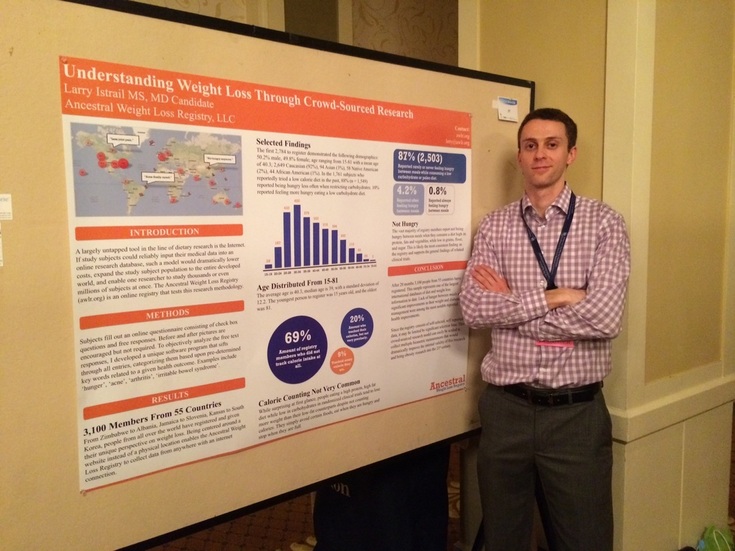
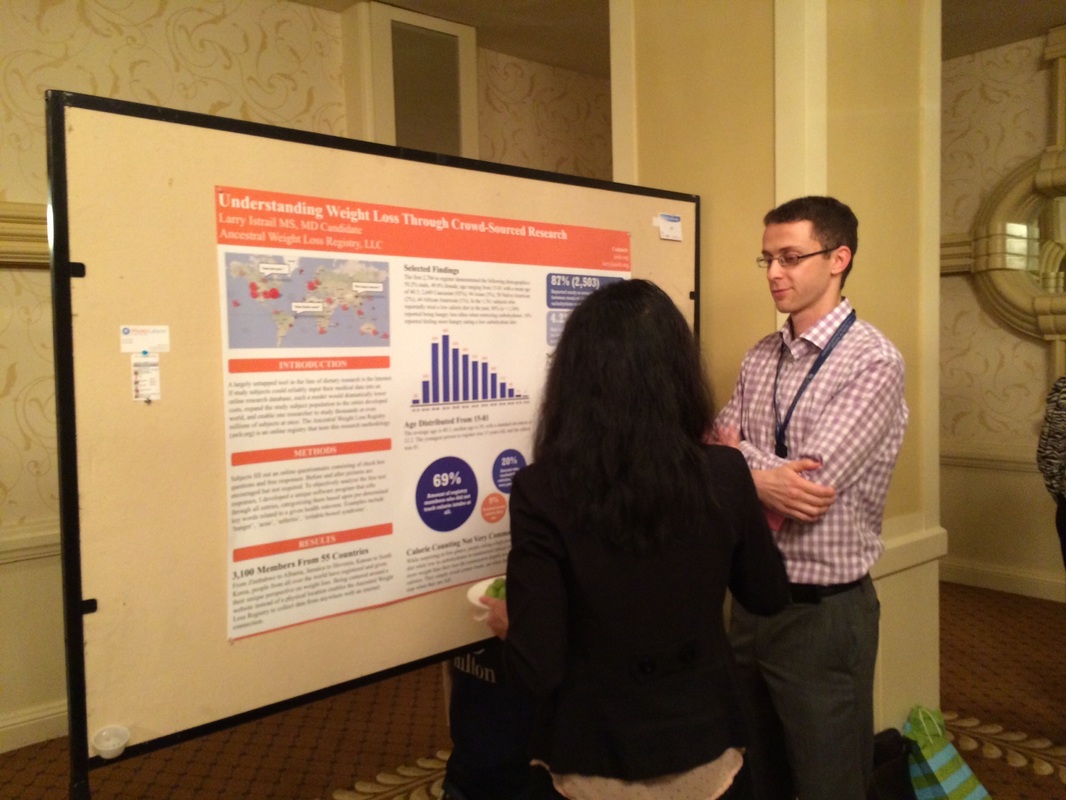
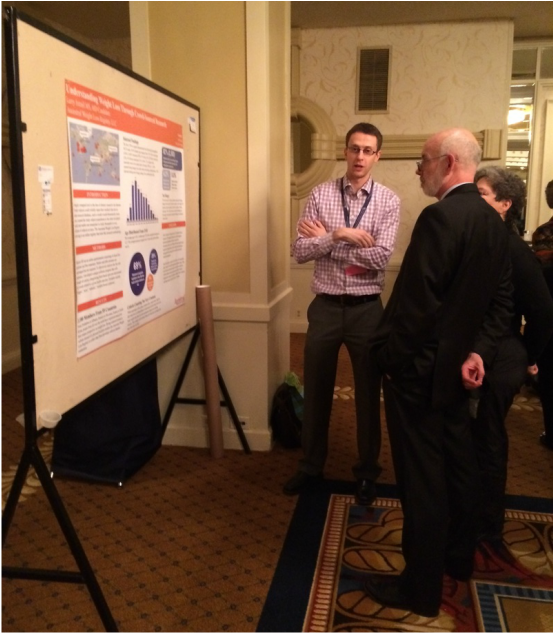
We are back from the American Society of Nutrition's Advances and Controversies in Clinical Nutrition. It was a great conference with many accomplished and engaging speakers. Poster presentations were Friday night, and we had a lot of interested visitors. Overall, the concept of crowd sourced obesity research was held in high regard. People were very surprised that this model was feasible without any funding or financial incentives for study subjects to participate.

The current model of medical research is: 
  1. Apply for funding and compete with thousands of other highly competitive ideas.
  2. If you are lucky, you get funding within a few years
  3. Recruit a relatively small number of subjects from the local area and pay dietitians and doctors and research coordinators
  4. Financially incentivize study subjects to participate.

This model is highly inefficient, extremely expensive, and only enrolls subjects from the area. But are results on 100 people from Boston, MA really representative of people in Alabama or Australia?

Our philosophy is to turn this model on its head and attempt to study the entire developed world without any funding at all. Using the internet, basic programming skills and some creativity, we are very happy with the progress we've made thus far. Of course none of this would be possible it wasn't for the 3,100 selfless people from around the world who have sacrificed their time and anonymity (only if they request to be featured on the blog) in an effort to improve our understanding of obesity and health through carbohydrate restriction. We thank you all very much.

Picture
Title Errors: Jumping the Gun a little bit with my MD Status. And maybe there is another Elizabeth out there looking for her badge still.

Picture
With Tufts Researcher.

Picture
Action shot.

---
Tried a paleo or low carb diet? Join Today and contribute to a better understanding of this way of eating!

View our Marketplace of paleo and low carb experts that compete against eachother to help you lose weight and get healthy!

0 Comments

Presenting AWLR at Advances and Controversies in Clinical Nutrition Conference

11/27/2013

0 Comments

 
Picture
We are traveling to Washington D.C. on December 5th for the American Society of Nutrition's Advances and Controversies in Clinical Nutrition Conference. You can see the program here.

Check out a sneak peak of our poster, in PDF form. We will be presenting on December 6th. Come stop by and say hi!
0 Comments

Moving into 2nd place on Google.

9/1/2013

0 Comments

 
Picture
Hooray!

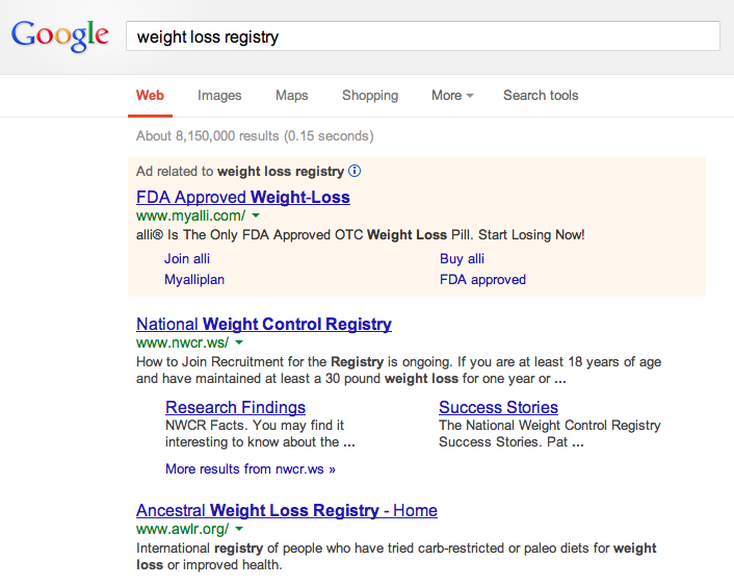
It's amazing to think how quickly this registry grew. From 0 members on January 1st, 2012 to over 3,000 a year and a half later. And second link on google when searching for "weight loss registry."

Thank you to everyone who has registered and helped spread the word.
0 Comments

Announcing Guest Blogging

6/24/2013

2 Comments

 
We are happy to announce the opportunity for anyone to submit blog posts to AWLR. Be heard on one of the fastest growing primal/paleo/low carb blogs on the web, with thousands of readers each month. We have been covered on Mark's Daily Apple, Robb Wolf's Paleo Solution podcast, the Livin La Vida Low Carb Show, the Gary Taubes blog, the VCU School of Medicine homepage, and much more.

Anyone is free to submit. Submissions will be reviewed by our staff and accepted or rejected within two business days. 

Some topics we are likely to accept include but are not limited to:
  • Reviews & critical analysis of research related to Paleo or low carb and how it affects health
  • Medical research related to food, exercise, diabetes, cholesterol, etc.
  • Book reviews
  • Innovative low carb and paleo recipes

Any direct advertisements of a product or service will not be accepted. However we are happy to help promote a blog, book or product if you can provide a meaningful post that our readers can benefit from. For example, providing an excerpt of your book or a case study of your work. In these cases, we will be happy to link to your product or website at the end of each post.


Ready to write for us? Head over to our submission page, and get started!

2 Comments

Keep it Coming

4/23/2013

0 Comments

 
Picture

Our testimonials page offers hundreds of quotes from all over the world from real people talking about their experiences with paleo or low carb, categorized by health topic, supporting many of Nell Stephenson's claims yesterday on the Dr. Oz show.
0 Comments
<<Previous

    RSS Feed

    Subscribe and Receive our Updates

    Archives

    June 2020
    October 2018
    January 2018
    March 2016
    February 2016
    January 2016
    December 2015
    November 2015
    October 2015
    September 2015
    August 2015
    July 2015
    June 2015
    March 2015
    January 2015
    December 2014
    November 2014
    October 2014
    September 2014
    August 2014
    July 2014
    June 2014
    May 2014
    April 2014
    March 2014
    February 2014
    January 2014
    December 2013
    November 2013
    October 2013
    September 2013
    August 2013
    July 2013
    June 2013
    May 2013
    April 2013
    March 2013
    February 2013
    January 2013
    December 2012
    November 2012
    October 2012
    September 2012
    August 2012
    July 2012
    June 2012
    May 2012
    April 2012
    March 2012
    February 2012
    January 2012
    December 2011

    Categories

    All
    1000 Members
    Aha
    Ancel Keys
    Atkins
    Carbohydrates
    Chicken
    Chipotle
    Cholesterol
    Conference
    Counting Calories
    Criticism
    Crossfit
    Diabetes
    Documentary
    Dr. Vernon
    Dr. Wahls
    Exercise
    Farming
    Fat
    Gary Taubes
    Grand Opening
    Harvard
    Hdl
    Heart Disease
    Heart Health
    Insulin
    Introduction
    Low Carb
    Low Fat Diet
    Low-fat Diet
    Marketplace
    Multiple Sclerosis
    Obesity
    Ornish
    Paleo
    Photocalorie
    Policy
    Primal Blueprint
    Results
    Robb Wolf
    Satiety
    Saturated Fat
    Saturated Fats
    South Beach
    Success Story
    Sugar
    Testimonials
    Transformation
    Triglycerides
    Updates
    Weight Loss
    Willet

Powered by Create your own unique website with customizable templates.