Ancestral Weight Loss Registry
  • Home
  • Join
  • Results
  • Testimonials
  • Science
  • Blog
  • About

Understanding Primal Blueprint through crowdsourcing

2/23/2014

0 Comments

 
This post first appeared on Mark's Daily Apple.
---
After two years, we at the Ancestral Weight Loss Registry (AWLR) are proud of what we’ve become. Over 3,100 people from all 50 states and over 55 countries have registered and shared the tribulations and triumphs populating their noble journey towards health, fueled by fatty meats with a side of buttered broccoli. A physician’s recommended eating strategy that, but for a few years ago, would at the very best be viewed as a data-less void of speculation, and at the worst, labeled utter quackery. Asking an overweight patient to eat foods high in calories does not pass the proverbial eyeball test, defying all common wisdom characterizing weight loss advice to date.

Coming up with a testable hypothesis for why we gain weight and how to lose it undoubtedly involves logic, intuition and researcher experience. As Nobel laureate Richard Feynman describes scientific discovery and hypothesis testing:
 

“First we guess it…then we compute the consequences of the guess to see what it would imply. And then we compare those computation results directly to observation to see if it works. If it disagrees with the experiment, it’s wrong. In the simple statement is the key to science”

But what if we didn’t have to guess it? What if we had the capabilities to crowd-source hypothesis creation instead of relying on bias-confounded researcher intuition? This is the motivation for AWLR, and central to its success is you. Primal Blueprint (PB) followers make up 40% of registry members and from the bottom of my heart, I thank those who have registered thus far and urge those who have not to register here today to help make AWLR the largest weight loss registry the world has ever seen.

PB eaters have contributed a tremendous amount of data. The common experiences and behaviors that materialize by straining your conglomerate information through an algorithmic sieve become hypotheses that spawn a reverse engineering problem, beginning with clinical findings and searching for mechanisms of action. One of the most interesting such trends was that related to hunger.

“After going primal, I just didn't get so hungry any more. And when I did feel hunger, it wasn't so pressing, and I could easily ignore it and it would go away for a while.”


“The ease of Primal Blueprint has surprised me the most. Fat tastes delicious, so I eat better-tasting food. I don't go hungry because I simply eat until I'm full instead of counting calories.”

See our testimonials page for hundreds of similar quotes. 95.8% of PB eaters report feeling “rarely or never hungry between meals” and of those who have tried a low fat diet in the past, 91% report feeling less hungry while eating PB. This satiety has led to an average of 33 pounds lost and over 31,000 pounds dropped total.

Could these findings be real? Or are they simply a function of the non-randomized, self-selected data that has accrued? Taking a journey through the medical literature may offer some insight.

They Starved, We Forgot
In 1944, Ancel Keys recruited 36 men into what would be known as the Minnesota starvation experiment, to study the physiologic and psychological effects of prolonged and severe dietary restriction. He documented his findings in a 1400 page tome, and shortly after the experiment began, the men quickly realized how difficult it might be. The predictable signs and symptoms quickly crept in: constant hunger, low body temperature, decreased libido and a total inability to think of anything but food. One subject offered a particularly chilling exposé of what it is like to eat such little food:

"How does it feel to starve? It is something like this: I'm hungry. I'm always hungry - not like the hunger that comes when you miss lunch but a continual cry from the body for food. At times I can almost forget about it but there is nothing that can hold my interest for long. I wait for mealtime. When it comes I eat slowly and make the food last as long as possible. The menu never gets monotonous even if it is the same each day or is of poor quality. It is food and all food tastes good. Even dirty crusts of bread in the street look appetizing and I envy the fat pigeons picking at them.”

So what were they eating? “The major food items served,” described Dr Keys “were whole wheat bread, potatoes, cereals, and considerable amounts of turnips and cabbage. Only token amounts of meats and dairy products were provided,” with an average daily intake of 1570 calories, including about 50 grams of protein and 30 grams of fat.

Fast-forward 70 years
The director of Boston Medical Center’s weight management clinic and obesity consultant for Dr. Oz, Dr. Caroline Apovian describes in an interview how she treats her patients’ weight troubles.

“If somebody came into my clinic who had a BMI of 30—female—I would put them on a 1,200- to 1,500-calorie-a-day diet, and they usually would be eating 2,500. A normal, moderately active female eats 2,000 calories a day, and a male, 2,500.” But wouldn’t this “produce a chronic hunger?” the reporter aptly counters. “It does,” replies Apovian, “and it’s usually a hunger that people cannot tolerate. That is the reason most diet programs fail.”

So how did the ‘starvation diet’ of 1944 become the standard of care today?

Protein, Hunger & Weight Loss

The Fat Trap, a popular New York Times article from 2011 profiles a study by Dr. Joseph Proietto, highlighting the difficulty in losing weight on a low calorie diet. Proietto recruited 50 obese men and women, studying the biological state of the body after weight loss. The patients were given 500 calories of a low fat Optifast shake each day for eight weeks. But after a year, the weight slowly came back and the subjects were haunted by their diet-induced hormonal changes, feeling “far more hungry and preoccupied with food than before they lost the weight.” Researchers also noticed that ghrelin, often dubbed the ‘hunger hormone,’ was about 20 percent higher than at the start of the study. “What we see here is a coordinated defense mechanism with multiple components all directed toward making us put on weight,” Proietto says. “This, I think, explains the high failure rate in obesity treatment.”

However, this weight-loss-induced ghrelin rise is only observed when ketosis is absent. These same researchers three years later sung to a different tune:


“Ketogenic low-carbohydrate diets are a popular means of weight loss, and in the short-term, often result in greater weight loss than low-fat diets…it is commonly proposed that ketones suppress appetite, and it has been observed that study participants on ad libitum ketogenic diets spontaneously restrict their energy intake.”

And their randomized trial in the European journal of clinical nutrition confirmed this observation, demonstrating that “in mildly ketotic participants, the increase in the circulating concentration of ghrelin, a potent stimulator of appetite, which otherwise occurs as a result of diet-induced weight loss, was suppressed.”

This anorexic effect secondary to a high protein, high fat diet likely explains why PB eaters are so successful and happy with their new way of eating. It could also explain why in the majority of randomized clinical trials testing such diets, those highest in protein and fat systematically lead to more weight loss. There are at least 14 randomized clinical trials in which the people assigned to a calorie unlimited high protein, high fat diet lose more weight than their low fat, calorie restricted counterparts.

Which begs the question: Where are the randomized clinical trials supporting low fat diets as the standard of care? The studies where a low fat, calorie restricted diet results in more weight loss than a calorie unlimited high fat diet. In fact, we at AWLR were so bewildered by the lack of evidence that we are running the ‘Low Fat Challenge’ for anyone in the world to find such a trial, incentivized by a crowd-funded pot of cash. After nearly a year, hundreds of dollars have been raised with no winner to accept.

My wildest dream would be to make AWLR the largest weight loss registry in the world within the next year, overtaking the National Weight Control Registry that has a 15-year head start. They boast around 10,000 members after approximately 17 years of existence.  At 3,100+ after two years, it is an ambitious but attainable goal; A dream that can only be achieved with your help. It would make a tremendously unbelievable statement to the dietary research community if Paleo and PB was so prominent and demonstrated such incredible improvements in health. If you have not registered yet, please take 10 minutes to do so here. And if you have, sharing this post with the world would make all the difference.

As you are reading these words, there is someone out there who is depressed, unhealthy and overweight. A poor soul being shunned by the medical community due to their “lack of willpower,” who struggles to get by on their 1400 calorie low-fat diet. A beautiful human being with boundless happiness trapped underneath the overwhelming heaviness of constant hunger and a label of ‘BMI > 30’, desperately searching for a real solution. With your help, I hope we can reach them and offer a gentle, heart-felt helping hand.

---
Tried a paleo or low carb diet? Join Today and contribute to a better understanding of this way of eating!

View our Marketplace of paleo and low carb experts that compete against eachother to help you lose weight and get healthy!
0 Comments

Initial Side Effects May Be Eased with a Slow Transition

5/11/2013

0 Comments

 
A common criticism of eating low carb or paleo is the negative side effects that may accompany your new way of eating. As described by the Mayo Clinic, if you "suddenly and drastically cut carbs, you may experience a variety of temporary health effects, including Headache, Dizziness, Weakness, Fatigue, Constipation..."

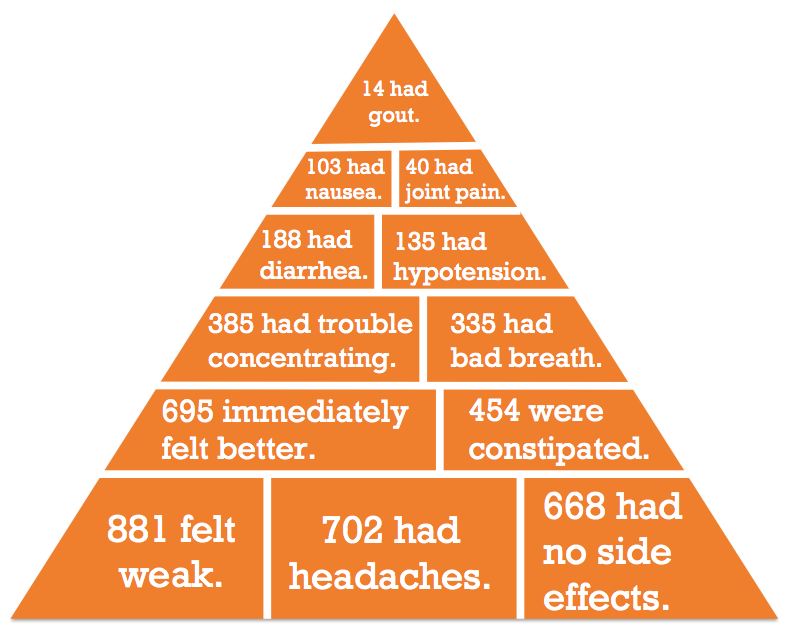
Based on our data, it looks like they may be onto something, emphasizing their choice of "suddenly and drastically." Below is a depiction of the most common side effects reported, which can also be seen on our results page.
Picture
Members commonly report withdrawal-like symptoms, very similar to those smokers experience when trying to quit. Headaches, irritability, intense cravings for carbohydrates and sugar, and flu like symptoms were common as people transitioned to their new way of eating. 

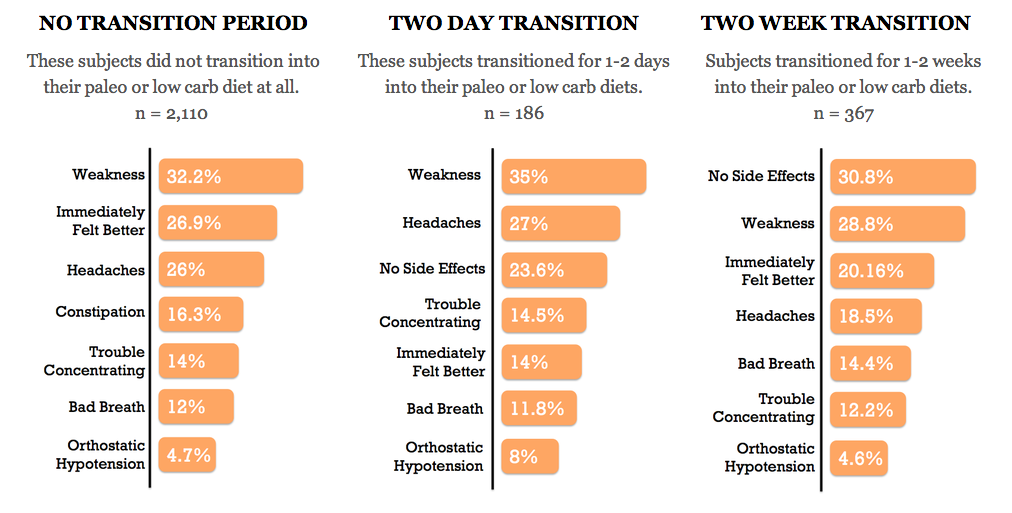
Based on our data of 3,000+ entries, it seems like these uncomfortable symptoms can me ameliorating by slowly transitioning into your new diet. Subjects that slowly transitioned into their new way of eating were more likely to experience no side effects, and less likely to report feeling weak or having headaches:

Picture

Just like any dramatic change to your daily living, a slow and easy transition may increase the likelihood of your longterm success and help you achieve the health benefits so many others have.

How have these side effects affected your experience?

---
Tried a paleo or low carb diet? Join Today and contribute to a better understanding of this way of eating!

View our Marketplace of paleo and low carb experts that compete against eachother to help you lose weight and get healthy!

0 Comments

Our own Nell Stephenson on the Dr. Oz show

4/21/2013

3 Comments

 
Picture

We are happy to announce that our very own Nell Stephenson will be appearing on the Dr. Oz show tomorrow (4/22/2013) discussing the paleo diet, along with her mentor and friend Dr. Loren Cordain. The title of the show is The Paleo Diet Craze: Does it Work? We aren't sure what to expect, but considering it is on the Dr. Oz show, we are very confident it will be overly dramatic! 

Book a consultation with Nell Now >

Why Nell Went Paleo:
From her profile: In 2004, I contracted a parasite during an Ironman race.  I sought medical advice and accepted my prescription for Flagyl right away, but continued to feel worse and worse. After six months, I was at my wits end. I began to research online and, through trial and error,  discovered I had developed an intolerance to gluten. Despite having spent six months visiting doctors and specialists (none of whom asked anything about my diet) and going to the E/R on more than one occasion, left to my own devices, I figured it out on my own.

I’d previously always eaten a ‘healthy’ diet with lots of veggies and fruit… as well as plenty of ‘good old’ whole grains, legumes (lots of soy and peanuts when I was vegan for two years!) and organic dairy.  I was a ‘fit’ age group athlete on the outside, but on the inside, my GI system seemed to be rapidly progressing from the mildly annoying stomachaches I’d had for years in varying degrees, to suddenly being doubled over in pain after every single snack or meal, for months!

Long story short… I stumbled across The Paleo Diet, read it, and began following it straight away.

I felt better in three days. I wrote to Dr. Cordain to simply thank him for his work and tell him what a gift it had been to me to discover it, and to share with my clients. He wrote back, and the rest is history!

Nell's Services:
You can work with Nell directly through our site. She offers skype or phone consultations as well as nutritional counseling. See her profile for more.

---
Tried a paleo or low carb diet? Join Today and contribute to a better understanding of this way of eating!

View our Marketplace of paleo and low carb experts that compete against eachother to help you lose weight and get healthy!

3 Comments

NBA Superstars Going Primal

2/18/2013

0 Comments

 
Picture
NBA Superstar Blake Griffin, is apparently trying the paleo diet. As described in this CBS article, "Griffin, who once looked constrained to a career as a mere provider of dunk highlights, has developed a level of seriousness about his game and preparation that has put loftier accomplishments within reach. As Paul kept feeding Griffin for dunks, you had a Synergy geek passing to a 23-year-old freak of nature who cares so much about nutrition and fitness that he has embarked on a 100-day Paleo Diet challenge with his manager, Atlanta-based Lorne Clark. For the uninitiated, that means he’s cut out sugar, processed foods, dairy and all grains except rice. 'It’s just kind of like a dedication thing," Griffin said. "I just wanted to see if I could do it.'"

Kobe Bryant seems to be adopting primal as well. LA Lakers trainer Gary Vitti says that the staples of Kobe’s diet include pasture based foods like grassfed beef and eggs from free-range chickens. Kobe makes every effort to avoid anything with corn syrup and his carbohydrate consumption has been scaled down to a very moderate level.

"Focusing on getting traditional fats into his diet and the wrong fats out is of prime importance to Kobe. Vitti described the dangers of following a lowfat diet and why Kobe is not following the USDA Food Pyramid – in fact, he’s following the inverse."

I hope it was the paleo diet that lets Blake Griffin do things like this:
0 Comments

When you're a hammer, everything looks like a nail

11/29/2012

4 Comments

 
"When you're a hammer, everything looks like a nail." No where is this statement more true than in medicine.  A perfect example is in the treatment of type 2 diabetes.

If a doctor suspects their patient may be diabetic, they can run an oral glucose tolerance test (OGTT), in which the patient is given a glucose load, and subsequent blood response is measured to see how effectively the glucose is cleared from the blood. In a non-diabetic, the blood sugar only rises a relatively small amount, as the intact and functional beta cells of the pancreas secrete just the right amount of insulin to reduce the blood sugar levels to normal levels. 

If a person is given an OGTT and their blood sugar spikes more than expected, then by definition they are glucose intolerant. They have failed their OGTT, and cannot tollerate carbohydrates the way a non-diabetic can.

In medical school, we are taught that the primary goal in treating diabetics is to keep blood sugar levels low, and that hemoglobin A1C levels are predictors of further disease progression. There are two major ways to control this blood glucose level, with what we put into our bodies as well as ways to control the blood glucose after it has already risen, such as insulin or other diabetes drugs, such as the alpha-glucosidase inhibitors.

Alpha-glucosidase inhibitors are a category of drug that work by decreasing the absorption of carbohydrates in your gut, resulting in a smaller rise in blood glucose. However, the unabsorbed carbohydrates need to go somewhere, causing the predicted unpleasant side effects of stomach discomfort and diarrhea.

Now instead of taking a drug that will reduce our absorption of carbohydrates, result in various side effects and and cost additional money, why not just eat less of the very foods spiking the blood sugar in the first place? In other words, why would the American Diabetes Association tell us that a diabetic diet should be 40-50% of the calories from carbohydrates, when by definition, these are the vey foods they cannot tolerate? Here is how they describe it on their meal planning page:

How Much Carb?
A place to start is at about 45-60 grams of carbohydrate at a meal. You may need more or less carbohydrate at meals depending on how you manage your diabetes. You and your health care team can figure out the right amount for you. Once you know how much carb to eat at a meal, choose your food and the portion size to match.


It seems equivalent to a person with a peanut allergy slightly lowering their peanut intake and just injecting him or herself with an epinephrine pen after each meal. Why not just stop eating peanuts and avoid the potential side effects of epi injections? Why don't they just not eat the carbohydrates in the first place? After all this was the treatment of diabetes in the pre-insulin era. Here is how Dr. Elliot Proctor Joslin described it in 1893:  

Diabetic treatment is of the first importance. The carbohydrates taken in the food are of no use to the body and must be removed by the kidneys thereby entailing polydipsia, polyuria, pruritis and renal disease…The beneficial effects were seen at once, and she was advised to “eat all the cream, butter and fatty foods possible.

And here is how the Joslin Diabetes Center, named after Dr. Joslin above,  describes it 120 years later:

“Starchy foods, such as bread, pasta, rice and cereal, provide carbohydrate, the body's energy source. Fruit, milk, yogurt and desserts contain carbohydrate as well. Everyone needs some carbohydrate in their diet, even people with diabetes....The biggest difference between the USDA’s guidelines and Joslin’s is the recommendation of fewer carbohydrates and more protein in the diet, as recent studies have shown that this helps people eat less and lose weight... [diabetics should consume] 40 percent [of calories] from carbohydrates."      

Diabetes is diagnosed by demonstrating a glucose intolerance and therefore, the first line of therapy should be a reduction in glucose. Why is this logic not the first, most obvious treatment? Of course if the patient refuses, or they reduce their carbohydrates and their blood glucose levels continue to remain elevated, then further therapy is in order.

I believe it is because food is not "a hammer" physicians are equipped with. Medical training in nutrition is essentially absent apart from outdated vitamin deficiencies,  yet doctors are expected to know it, so they default to the USDA's MyPlate for advice and information. This is seen as a constant, unchangeable  variable in treatment of any food related disease, regardless of the etiology, given the label of "diet" or "lifestyle." Just the fact that alpha-glucosidase inhibitors are used as a treatment before a low carbohydrate diet confirms this.

Furthermore, if the patient is given a low fat high carbohydrate diet (as is the standard of care today) to manage their high blood sugar and they do comply with it meticulously, they will very likely need the insulin, alpha-glucosidase inhibitors, and/or metformin to control their daily dose of 180 grams of the very nutrient they cannot tolerate.

Clinical Trials
When you look for clinical trials testing this logic, you see things like this:
Picture
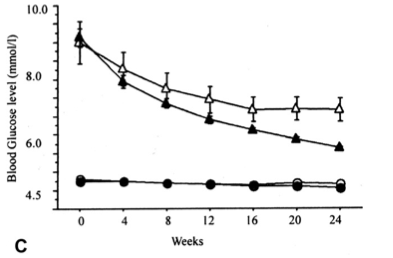
Husain et al. 2012
Picture
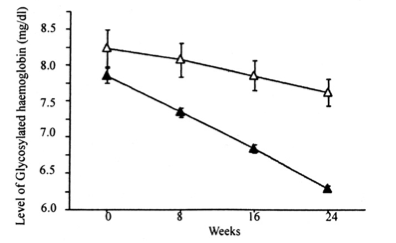
Hemoglobin A1C levels. Dark triangles are patients on the low carb, ketogenic diet. White triangles are patients on the low fat, high carb diet.
The triangle lines are the diabetic patients. The dark triangles represent those on a low carb, ketogenic diet. Their blood glucose and Hemoglobin A1C is significantly lower than those eating a low fat, high carbohydrate diet. This graph also illustrates how in non-diabetics (the circle lines), there is no difference, further supporting the fact that diabetics are carbohydrate intolerant.

Treating Type 2 diabetes with food
Once you have a basic understanding of how the three major macronutrients alter your blood glucose and insulin levels, devising a plan to reduce blood sugar levels becomes simple. 
  • Carbohydrates of all kinds raise blood glucose AND insulin
  • Protein spikes insulin AND DOES NOT seem to spike blood glucose, despite the theoretical ability of the amino acids to be converted into glucose via gluconeogenesis
  • Dietary fat does not raise blood glucose OR insulin

Armed with these 3 simple facts, the intuitive treatment of high blood glucose would be: 
  1. A decrease in carbohydrates, which spike blood glucose 
  2. An increase in protein which acts to secrete insulin and thus reduce blood glucose (essentially acting as giving a patient insulin or sulfonylureas)
  3. An increase in dietary fat, which is insulin and blood glucose neutral.

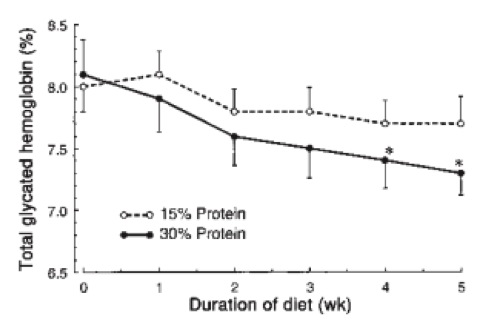
And when people eat this way, this is exactly what you see when it is tested:
Picture
Hemoglobin A1C in patients with a higher protein diet (dark line) as compared to a low protein diet (dotted line).
---
Tried a paleo or low carb diet? Join Today and contribute to a better understanding of this way of eating!

View our Marketplace of paleo and low carb experts that compete against eachother to help you lose weight and get healthy!

4 Comments

Down 125 pounds and feeling great with low carb & paleo

7/23/2012

3 Comments

 
Meet the old Eric.
Picture

I started out a few months before my 39th birthday at about 320 pounds with the goal of meeting 40 at a reasonable weight, which for me is around 200 pounds (not the 175 recommended according to BMI recommendations, due to my larger frame). I had previously attempted weight loss before, and had been at healthy weights a couple of times over the intervening 30 or so years. I kept reading that after 40 it becomes somewhat difficult to lose weight, so I wanted to attempt it one more time before resigning myself to all the metabolic problems that come with excess fat storage. I had previously been successful following the Dr. Atkins plan, but as so many others, I started the Induction phase and had such good success that I never progressed on to OWL. That is to say, I severely restricted my carb intake to about 60g of carbs a day, period. I was able to maintain this for a few months, but when it got close to a year, I found that I couldn't continue to eat this way. 

I read Gary Taubes' "Good Calories, Bad Calories", and realized that nutrition was not simply carbs vs proteins, vs fats, but rather nutrients and metabolic processes that would compliment and feed back on each other. I changed my eating habits as follows; first, I did severely restrict carbohydrates for the first few weeks for a couple of reasons. First off to break the carbohydrate/insulin feedback loop and get my body burning fats instead of sugars. The second reason was to de-sensitize my palate to sweet. Our diets contain so much added sugar that we can no longer taste the natural sugars and sweet flavors in real food. After a couple of weeks of severely restricting carbohydrates in general (but specifically any kind of sugar; sucrose, HFCS, fructose, lactose, etc) of course the weight started to come off. 

Over time I re-introduced some carbohydrates into my diet, but for the most part fruits and vegetables. I did avoid grains in general, especially corn and wheat. The only exceptions to the ban on grains was Quinoa, which I found as a great compliment to any dish, and brown rice, as my ethnic background made it very difficult to eschew rice completely. Those were infrequent additions to my menu which consisted of mostly proteins and fats. The main focus of my eating plan was to avoid processed foods completely. I did a lot of cooking at home and starting with raw ingredients. I rarely if ever ate anything that would come out of a box, a bag, or a can. I became a label-reader and would avoid any product that had more than 5 ingredients (to me that was a sure indicator that it had been moderately processed). I also consciously watched my portions, as I knew that I was overeating in any case. My golden rule was "all things in moderation". The trick is determining what the appropriate amount of any given food was. 

After eating in this style for almost two years now, I know it is a sustainable approach to eating. What I did not realize at the time is that this closely follows the "Paleo" or "Primal" nutritional approaches. What I realize now is that as omnivores, we are equipped to nourish ourselves with a lot of different sources. It is when we take one nutritional source and consume it almost to the exclusion of other foods that we get into metabolic trouble. Too much science has been devoted to isolating carbs, or fats, or refined sugars, or this micronutrient, or that micronutrient, and then making these huge sweeping claims about their benefit or dangers. What had not been approached is how we need all of these nutrients in the correct amounts based on our own metabolic chemistry to keep us at healthy weights and at optimal health. This balance will vary by individual and ethinc background, but by and large we can all agree that none of us are equipped to consume the huge amounts of refined sugars we find in our foods nowadays. By cutting down to the bone and starting with reasonable quantities of proteins, HEALTHY and NATURAL carbohydrates, natural (not processed and industrially extracted) fats, any one of us can start to repair the metabolic damage that our modern refined and processed diets have done to us.

Another aspect of my weight loss success is definitely getting exercise whenever possible. During my weight loss efforts, I was diligently going to the gym three times a week for an hour each time to do resistance training and some cardio. I would change up my routine almost every time I was in the gym. I had a big list of different exercises and the goals of that particular exercise, and would mix and match from there. I would always do some kind of cardio-ish work; sprints some days, stationary bikes some day, a run outdoors some days. Same with the strength. Some days I would do body weight exercises like pull-ups, push-ups lunge squats. Some days I would do static resistance like planks, other days I would just use resistance machines. The goal was always to work the muscles both in reaction-type exercises (to build fast-twitch muscle fibers) and more sustained resistance (to build up the slow-twitch muscle fibers). I continue this workout routine to this day, and it is easily sustainable and is still enjoyable. 

Another big contributor was to move as often as possible. I never take an elevator any more, always the stairs. I don't look for the closest parking spot at the office or the shopping center. I turn common household chores into an opportunity to do exercises by concentrating on balancing and squatting when I am putting away dishes, or reaching and stretching when I need to get things off of the top shelf. I avoid plopping down on the couch or on the bed after dinner and staring at the TV or the computer. Its not to say I won't watch TV, but I am doing something while I watch. I also took up some additional hobbies that keep me occupied at night. It doesn't necessarily have to be something physically active, but at the very least I am standing while I do it (motor repair, or wood work, that kind of thing) At lunch time I don't just go to the break room and sit, but rather take my lunch outside and take a walk while eating lunch. I make an effort to get enough sleep (7-8 hours every night), and make an effort to rise with the sun even on weekends and days off. When I have down time, it is spent taking my kids on a hike, or a bike ride, or a swim if its the right time of year. I basically keep trying to move as often as possible to keep the muscles moving, contracting, and out of "idle" mode.

In conclusion, I do want to say that I have been at my healthy weight of 195 pounds for a year and a half now. My goal is to maintain this weight for at least the next 5 years without having to plunge back into "restricted" mode i.e. just maintaining my eating and exercise regimen as it is now. I have relaxed a little bit in that I will occasionally indulge in something sweet (birthday cake, or a spectacular dessert to cap off a night out) or possibly have something that is served with bread. My body can now tolerate it without showing obvious ill effects. I have reached a sustainable balance of restricting certain foods, eliminating other foods, and exercising. I can foresee me maintaining this lifestyle and my healthy weight and build into my 50s, 60s, and beyond.

Meet Eric Today.
Picture
What was the biggest challenge to adopting a carbohydrate-restricted or paleo diet?
The biggest challenge was managing my portions. Even though I had eliminated a lot of the processed foods, fact is that our bodies will still take excess calories and store them as fat. Its the way we are made, its the mechanisms that helped us survive as a species for hundreds of thousands of years. You still can't have a half pound of bacon, a dozen eggs, and a 16 ounce (thats a pound of meat, boys and girls) steak every day and expect to lose weight. Your body will want to hold on to those excess calories in case the local market closes down and your next meal is a week down the road. If your metabolic mechanisms that regulate hunger and satiety are broken, you need to rely on visual queues to insure you are not consuming excess nutrients. Learn to measure portion sizes and recognize them, and learn to limit yourself based on these visual queues rather than the biochemical indicators which at this point may be damaged and in need of repair. 

What advice (if any) would you give to someone interested in trying a carbohydrate-restricted or paleo diet? Were there any obstacles that you overcame that could help future dieters?
My biggest advice I can offer other carb-restricted dieters is to remember that it is a process. You didn't become obese or overweight from one day to the next. Your metabolism is probably damaged, and needs to be repaired. Like healing any broken body part it takes time, and sometimes feels unpleasant. Stick with it as best as you can, and if you fall off the wagon, don't give up. Don't even say "today is shot, I'll try it again tomorrow". Recognize that you may have eaten something that is not proper for optimal health, and immediately dismiss it and go on. Even small changes in your eating habits where you eliminate some of the refined and processed foods will have a benefit.

---
Tried a paleo or low carb diet? Join Today and contribute to a better understanding of this way of eating!

View our Marketplace of paleo and low carb experts that compete against eachother to help you lose weight and get healthy!



3 Comments

New documentary on paleo and low carb nutrition

5/18/2012

1 Comment


It is very exciting to see a new documentary in the works about paleo and low carb nutrition. Here is how the film makers describe it:

"In Defense of Fat" clarifies the complex relationship between human evolutionary history and the science - and politics - of nutrition and health.
The film is firmly rooted in current scientific research on Ancestral Health, a theory which proposes that the human body is not adapted to an agricultural diet, and especially not to the many processed foods in our daily lives.   As a result, 'healthy' low fat diets and "essential" carbohydrates may actually increase rates of diabetes and obesity, and dietary fat may not be to blame for our expanding waistlines. Through in-depth interviews, animation, and examination of our cultural attitudes, “In Defense of Fat” will explain the complex issues at play in our national discussion of diet and health.

They already have big name interviews lined up, like Mark Sisson and Robb Wolf. In order to get this off the ground, they need to raise $50,000. They are doing this through kickstarter. Please consider donating and contribute to the movement!

http://www.kickstarter.com/projects/kennonhulett/in-defense-of-fat-a-new-documentary-about-obesity


1 Comment

Never eat an empty calorie, never have to count calories

4/9/2012

0 Comments

 
Meet the old Ali:
Picture
“Never eat an empty calorie, never have to count calories.”

I got into all this via the science book “Why We Get Fat,” which explains how the rise in processed sugars - not fats (trans-fats excluded) - are the cause of the obesity/diabetes epidemic. Then I quickly discovered (via the internet) the Paleo diet which is based on how humans ate for 99.9% of our evolution (3.5 million years). Paleo does not include food introduced since the onset of agriculture (10,00 years ago). It is comprised of organic non-GMO vegetables, grass-fed meat, wild fish, grass-fed butter & ghee (for some), fermented foods, unheated olive oil, animal and coconut fats, a bit of fruit in season, but no grains, no added sugars, no legumes, no soy, and no industrial oils (canola, corn, soy, safflower, etc.).

Since February, I’ve lost 20 pounds of fat and gained 5 pounds of lean muscle. I eat more and better tasting food than I did while on Weight Watchers (which I had been on for 9 years). The biggest change, though, has been that I no longer am obsessed with food, nor am I hungry every few hours. My carb-induced cravings have disappeared, and for the first time in my life, I feel free. It’s transformative.

While many Paleo people do Crossfit, I felt that it might be too difficult for me. Instead, I am doing high-intensity training (HIT) based on Dr. Doug McGuff’s book “Body by Science.” It requires an extremely intense but safe machine-based weightlifting protocol once per week for 15 minutes (the theory being that your body needs at least 7 days to repair and rebuild). I purposely do no rigorous aerobics (chronic cardio),  but I do get in a low-level cardio walk for 30 minutes every day.
Meet Ali Today:
Picture
What was the biggest challenge to adopting a carbohydrate-restricted or paleo diet?
Having to cook every meal (and do the dishes).

What advice (if any) would you give to someone interested in trying a carbohydrate-restricted or paleo diet? Were there any obstacles that you overcame that could help future dieters?
Try Dr. Jack Kruse's Leptin Reset FIRST in order to quickly eliminate cravings.

---
Tried a paleo or carb-restricted diet? Join the registry today and contribute to a better understanding of this way of eating.
0 Comments

From 50% to 15% body fat with the Primal Blueprint

3/5/2012

1 Comment

 
Meet old Charlie:
Picture
After graduating college in 2005, I did two several-month-long stints with Weight Watchers and a six-month-and-one-day stint as a vegetarian. I regained the several dozen pounds lost and then some, despite working out a lot. I basically gave up trying. I figured with a good family history of diabetes and heart disease, genetics would be destiny and I might as well eat whatever I wanted until health complications and/or old age forced me to do otherwise. In what was supposed to be the prime of a young man's life, I struggled to just walk into work every morning (I'm an accountant). 

My best friend intervened, concerned about my slowly deteriorating health. Long story short, he eventually persuaded me to join a gym with him. Once in the gym, I decided that I would try dieting and exercising a fourth time. But the definition of insanity, as we know, is doing the same things over and over again yet expecting different results. So instead of trying a restricted calorie, low-fat approach or another vegetarian stint, I would try something completely different. In this change of focus, I found Mark Sisson's Primal BluePrint. I read it on my Kindle e-reader while struggling to do the elliptical machine in the gym. 

It changed my life, forever. 

For the first ten months, I kept my net carb count to 20 grams per day without counting or recording a single calorie. Though I incorporated a cheat item once a week, almost every week. Sometimes it would be popcorn or pizza or worse--but it would be something really tasty. But every time, I hit the gym hard the next day and have found it easy to get back on the wagon every single time. I've found that it's a trade-off I can adopt easily for life, even if I no longer lose weight. Now I can go longer between cheat meals. 

I interpreted plateaus to mean that I need to try something different. After about 100 pounds lost and hitting a long plateau, I decided to finally start logging my foods using MyFitnessPal. And here is when I started to meet other low-carbers online for the first time, and they helped support and give me new ideas to experiment with. I've done pretty well since then.

I've gone from 50% body fat to 15% now. At my heaviest, I used to wear size 54 pants to work; now I wear size 32 comfortably. I used to wear 4XL size t-shirts; now I fit comfortably into mediums, even after they've been washed a few times. All of my lab results have been consistently phenomenal. I actually look forward to my annual physicals and take advantage of every free and low-cost opportunity to get blood tests done. For the first time in my life, my eye prescription strength has not changed. Ever since going low-carb (mostly paleo at that), I've not had any new cavities--only brushing my teeth once a day after dinner. My main goal/challenge this year is to get down to about 10% body fat and show off six-pack abs by X-mas. 

Introducing Charlie Today:
Picture
What was the biggest challenge to adopting a carbohydrate-restricted or paleo diet?
Going it alone within a society and among a group of folks, co-workers, and acquaintances who largely don't subscribe to low-carb/paleo. Luckily for me, low-carbers and paleo folks are active and supportive online and in writing some great books, like Gary Taubes's Why We Get Fat, Dr. Eades' "Protein Power LifePlan," and Dr. Shanahan's "Deep Nutrition."


What advice (if any) would you give to someone interested in trying a carbohydrate-restricted or paleo diet? 
I had a lot of misinformation about low-carb before even trying it. But I was at a point where I desperate enough to try something I considered, at the time, "extreme." I would recommend a few good books and blogs (like Mark Sisson's Primal Blue Print and his Daily Apple) among a few other excellent ones. 

Another barrier was that unlike Weight Watchers, there really is no support group for low-carbers offline. I like to use MyFitnessPal to connect with other low-carbers that can help encourage and provide advice. I actually wish I had done it earlier than I did, but I'm glad I eventually did it all the same.


----

Tried a paleo or carb-restricted diet? Join the registry today!
1 Comment

CrossFit Coach and Physical Therapist on Going Paleo

2/16/2012

2 Comments

 
Meet Sara.
 
Picture
 
I am a Doctor of Physical Therapy as well as a Certified CrossFit coach and co-owner of CrossFit Craic, which is a fitness training and education center located in Dedham, MA.  I always seemed to have been viewed by my friends as the "healthy" one because I was the first to eat whole grain pasta, brown rice and oatmeal.  Eventually, as my husband and I got more and more into CrossFit and the functional fitness movement, we began stumbling upon the works of Taubes, Loren Cordain, Robb Wolf, etc., and learned that the "healthy" things we were reading really weren't what they were all cracked up to be....at ALL.  

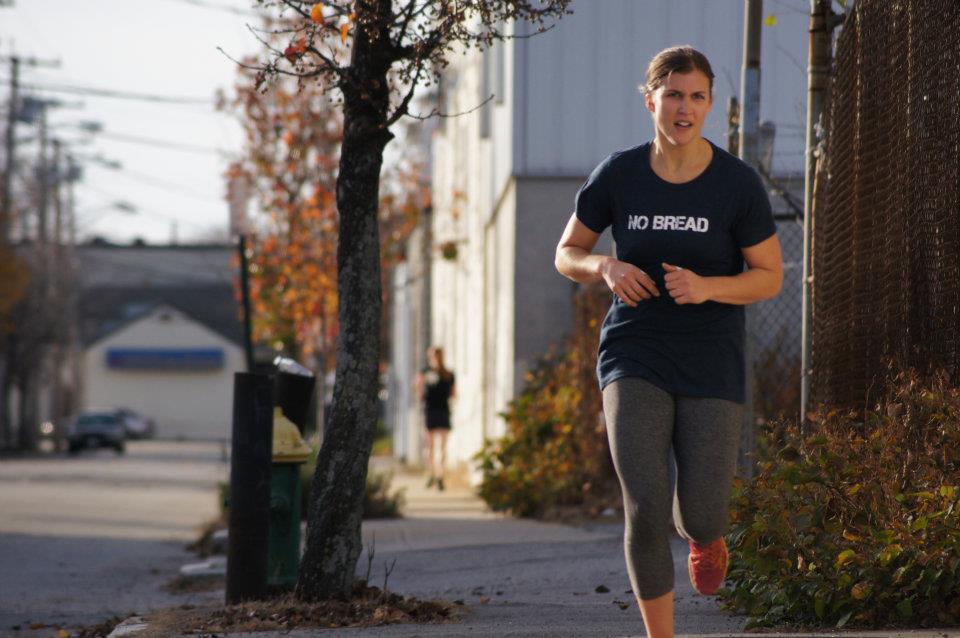
John (my husband) and I slowly began cutting out grains and processed carbs over the course of about one and a half years.  Since I have been living the "paleo" lifestyle, I have been stronger, healthier and happier than I have ever been.   The best thing in this experience for me is that my husband and I have changed the eating habits of my immediate family and the great majority of our clients at our private training facility.  We ascribe to and promote the paleo/primal ("No Bread" as well call it) lifestyle and time and again hear amazing stories from our members of significant fat loss, reversals of chronic health conditions, and otherwise life and family changing events.  Making the choice to eat the way I do has certainly changed my life.  
Picture
What was the biggest challenge to adopting a paleo diet?  

Not eating the processed, pro-inflammatory carbs that I used to eat is easy, since I gave it up relatively gradually.  The biggest challenge for me is coming up with a brief and honest answer to a questioning person as to why I eat the way I do.  Invariably, when people find out the way I eat, I find that answering them truthfully ("because it's bad for you" or "because it's poison") is usually met with some derisive, patronizing or otherwise non-constructive comments.  If I tell a white lie and say "I'm sensitive to gluten" or "it makes my stomach hurt", people tend to nod their heads and leave me alone.  Does this truly satisfy me?  Not really, but...it is difficult to reverse decades of propaganda in a five minute bus ride.  I haven't quite figured out the best response yet. 
What advice (if any) would you give to someone interested in trying a paleo diet? Were there any obstacles that you overcame that could help future dieters?   

People approach this lifestyle many different ways, and since I have succeeded with mine I'll definitely provide some advice which I often give to my clients.  First...I am NOT on a diet.  I live a healthy lifestyle which involves not eating certain foods because they are bad for me.  This is in the same vein as saying that cigarettes or illicit drugs would not be conducive to my healthy lifestyle, therefore I do not consume these things.  If I can keep this in mind, it is easy for me to avoid processed, pro-inflammatory carbs without feeling like I'm deprived of anything; I know they are not good for my body, therefore I simply do not eat them.  

So my biggest piece of advice is try to get this into perspective: if you choose to eat a carbohydrate restricted/paleo/primal diet, you are making a CHOICE to follow a healthy LIFESTYLE.  Diets suggest short-term; I am more concerned about longevity and sustainability of a health choice. Another piece of advice I have is to get into it gradually: start by having a carbohydrate restricted breakfast, then add in lunch, etc.  I know some people promote going all in, cold turkey, which works for some people.  That tactic definitely doesn't work for me, and it may not for others as well.  Definitely figure out the best way to go into it so that you will succeed and SUSTAIN.  Lastly, get a teammate or two. 

At my business (CrossFit Craic in Dedham, MA), my clients and I all have a Facebook group dedicated to share stories, recipes, etc., with our lifestyle choice of "No Bread" (as we refer to it).  It is a great place for support, and I would highly recommend getting a loved one or friend on board with you, as it will make your journey into a healthier lifestyle much, much easier.  You will have someone else to commiserate with as you are forced to stand in the face of years of governmental hogwash :-).


Learn more about Sara and John and CrossFit Craic here: http://www.crossfitcraic.com/

---
Tried a paleo diet? Join the registry!
2 Comments
<<Previous

    RSS Feed

    Subscribe and Receive our Updates

    Archives

    June 2020
    October 2018
    January 2018
    March 2016
    February 2016
    January 2016
    December 2015
    November 2015
    October 2015
    September 2015
    August 2015
    July 2015
    June 2015
    March 2015
    January 2015
    December 2014
    November 2014
    October 2014
    September 2014
    August 2014
    July 2014
    June 2014
    May 2014
    April 2014
    March 2014
    February 2014
    January 2014
    December 2013
    November 2013
    October 2013
    September 2013
    August 2013
    July 2013
    June 2013
    May 2013
    April 2013
    March 2013
    February 2013
    January 2013
    December 2012
    November 2012
    October 2012
    September 2012
    August 2012
    July 2012
    June 2012
    May 2012
    April 2012
    March 2012
    February 2012
    January 2012
    December 2011

    Categories

    All
    1000 Members
    Aha
    Ancel Keys
    Atkins
    Carbohydrates
    Chicken
    Chipotle
    Cholesterol
    Conference
    Counting Calories
    Criticism
    Crossfit
    Diabetes
    Documentary
    Dr. Vernon
    Dr. Wahls
    Exercise
    Farming
    Fat
    Gary Taubes
    Grand Opening
    Harvard
    Hdl
    Heart Disease
    Heart Health
    Insulin
    Introduction
    Low Carb
    Low Fat Diet
    Low-fat Diet
    Marketplace
    Multiple Sclerosis
    Obesity
    Ornish
    Paleo
    Photocalorie
    Policy
    Primal Blueprint
    Results
    Robb Wolf
    Satiety
    Saturated Fat
    Saturated Fats
    South Beach
    Success Story
    Sugar
    Testimonials
    Transformation
    Triglycerides
    Updates
    Weight Loss
    Willet

Powered by Create your own unique website with customizable templates.